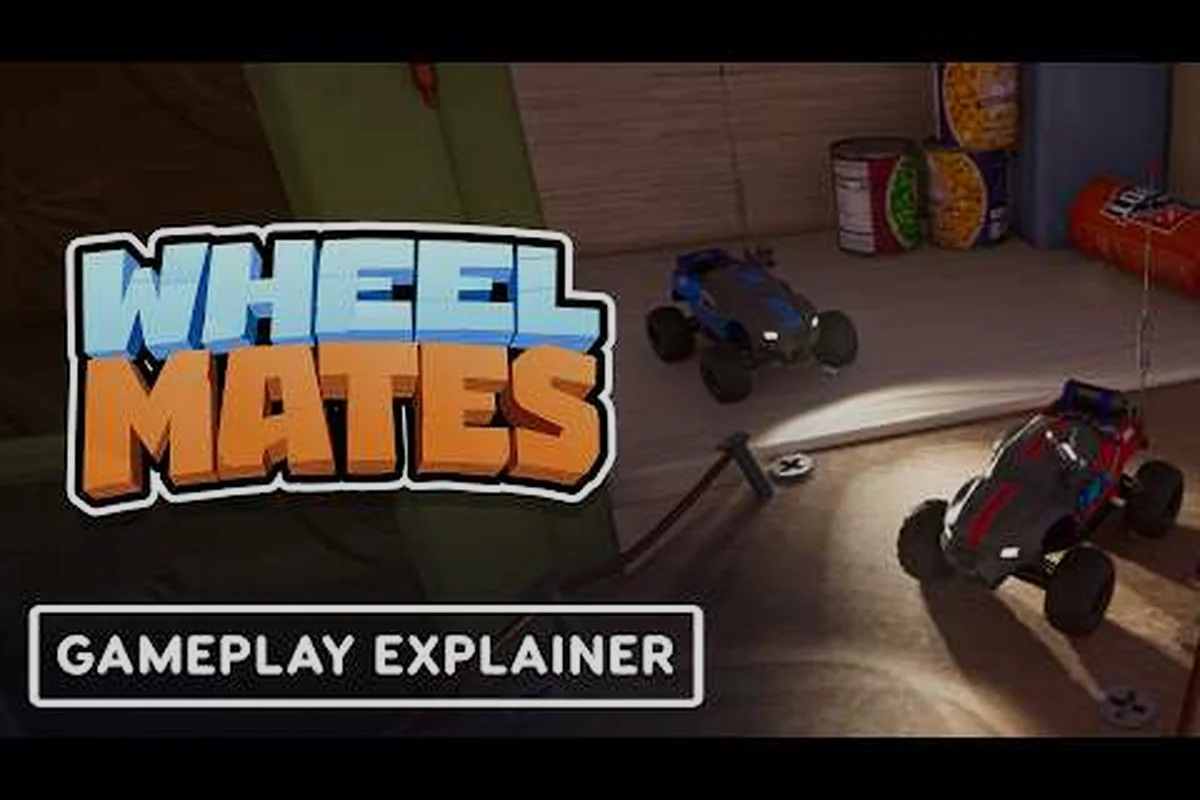
Wondering how to get good at WheelMates before it launches on September 1, 2026? This WheelMates guide breaks down the core skills, gadget mastery, and co-op strategies that separate casual drivers from players who breeze through every puzzle. Whether you are new to the game or looking to sharpen your technique, these WheelMates tips will give you a clear path forward.
WheelMates How to Get Good: The Core Skill Framework
| Event | Date | Details |
|---|---|---|
| Pre-announcement | August 12, 2026 | Original September 7 target moved up to September 1 |
| Official release | September 1, 2026 | Steam launch confirmed by release date trailer |
| Backyard closed test | June 26–28, 2026 | Announced via official Steam News posts |
| Demo gameplay | Pre-release | Camodo Gaming walkthrough, 73,663 views, showing rope-swing, magnetic wheel, and magnet grab puzzles |
The fastest way to improve at WheelMates is understanding that the game rewards deliberate practice over raw reaction speed. According to the official WheelMates Steam News, the game is built around three core gadgets: the rope swing, magnetic wheels, and magnet grab. Each gadget demands a different control approach, and mastering the transition between them is what separates average players from skilled ones.
The demo gameplay showcased by Camodo Gaming on YouTube reveals that most new players struggle because they treat every gadget like a driving challenge. In reality, WheelMates is closer to a physics puzzle game where your RC car is just the delivery vehicle. The moment you shift your mindset from "racing" to "problem-solving," your performance improves dramatically.
The Three Gadget Proficiency Levels
Every gadget in WheelMates has a learning curve that follows three stages: awareness, control, and mastery. Awareness means you know what the gadget does. Control means you can execute it without thinking. Mastery means you can chain gadgets together mid-motion without losing momentum.
| Gadget | Awareness (1-2 hrs) | Control (3-5 hrs) | Mastery (6+ hrs) |
|---|---|---|---|
| Rope Swing | Understanding swing arc | Timing the release point | Chaining swings across gaps |
| Magnetic Wheels | Knowing which surfaces stick | Driving on walls smoothly | Switching surfaces mid-drive |
| Magnet Grab | Knowing what it picks up | Positioning objects precisely | Using objects as platforms |
The progression is not linear across gadgets. Most players report that magnetic wheels take the longest to master because they completely invert your spatial awareness. When you're driving on a ceiling, your brain's natural orientation cues stop working, and you have to rely on the camera and your internal map of the room.
WheelMates Guide to Mastering the Three Gadgets
Now that you understand the skill framework, let's break down each gadget with specific techniques that will help you get good at WheelMates faster. These are the exact mechanics you'll need for the professor's home laboratory puzzles, based on community testing from the demo period.
Rope Swing: The Art of Timing
The rope swing is your primary traversal tool. The key is understanding that you don't need to swing from every anchor point. Sometimes the smartest move is dropping early to land on a platform that's slightly below your current position. Players who try to swing to the highest point every time actually lose more time than those who plan shorter swings.
Here's a quick reference for rope swing timing:
-
Release early when the target is below your current height
-
Release late when you need maximum horizontal distance
-
Never swing backward unless you're deliberately repositioning
-
Chain swings by holding the rope until the last moment, then immediately grabbing the next anchor
The most common mistake reported by players in the demo period is over-swinging. You think you need to reach the highest point, but the puzzle is designed for a mid-height release. If you find yourself missing the same platform repeatedly, try releasing half a second earlier.
Magnetic Wheels: Rethinking Gravity
Magnetic wheels let you drive on walls and ceilings, but they also change your steering input. When you're on a wall, your left and right inputs are the same, but your forward and backward inputs now move you vertically. This inversion trips up most beginners.
The trick is to use the camera as your reference, not the car. When you switch to a wall, rotate your camera so that "up" on your screen matches "forward" for your car. This keeps your muscle memory intact. According to community reports from the demo, players who adjusted their camera before attempting wall sections completed them in half the time.
Magnet Grab: Precision Positioning
Magnet grab is the most puzzle-focused gadget. You'll use it to pull objects, move platforms, and sometimes reposition your partner. The key skill here is positioning before grabbing. Don't grab the first object you see—check the puzzle layout first, then decide what to move and where.
This is where the WheelMates controls for beginners guide becomes essential. The camera controls and gadget switching layout directly affect how quickly you can reposition. If you're still fumbling with button mapping, you'll lose precious seconds on every magnet grab puzzle.
WheelMates Tips for Co-op: Communication and Role Splitting
WheelMates is designed as a co-op experience, and the official Friend's Pass details confirm that two players can tackle the entire game together. The difference between a good co-op team and a great one comes down to role splitting and communication patterns.
The Two Roles: Driver and Support
In most puzzles, one player acts as the Driver, handling the rope swing and magnetic wheel sections, while the other acts as the Support, using magnet grab to position objects and activate switches. These roles should be flexible, but having a default assignment helps you start puzzles faster.
| Puzzle Type | Driver Focus | Support Focus |
|---|---|---|
| Rope Swing Gauntlets | Swing timing and momentum | Positioning platforms for landing |
| Wall Drive Sections | Camera orientation and speed | Spotting the next magnetic surface |
| Magnet Grab Puzzles | Moving to the target zone | Grabbing and positioning objects |
The biggest mistake co-op teams make is both players trying to do everything. When you're both driving around randomly, you waste time and often trigger the same puzzle element twice. Instead, decide who handles which gadget before you enter a room.
Communication Patterns That Work
Effective WheelMates teams use short, specific callouts rather than long explanations. Instead of "I think I need to go over there and maybe grab that thing," say "I'm taking the left wall, you grab the crate." This precision cuts puzzle time dramatically.
According to community reports from the demo period, teams that established a callout vocabulary before playing completed the first three rooms in under 20 minutes, while unprepared teams took over 40 minutes. The vocabulary doesn't need to be complex—just consistent terms for each gadget and direction.
WheelMates Basics: Common Mistakes and How to Avoid Them
Every WheelMates player makes the same mistakes when they start. Understanding these basics before you play will save you hours of frustration. These are the most frequently reported issues from the demo period, based on community testing and player feedback.
Mistake 1: Overusing the Rope Swing
The rope swing is fun, but it's not always the right tool. Many players swing across gaps when they could simply drive around. The rope swing uses momentum that can be hard to control, and missing a landing costs you more time than taking the long way around. Evaluate the room layout first before deciding to swing.
Mistake 2: Ignoring the Camera
The camera is your most important tool in WheelMates. When you're driving on walls or ceilings, the default camera angle can be disorienting. The game offers multiple camera modes, and you should switch between them based on your current section. The follow camera works well for open driving, but the free camera is better for wall sections and precise positioning.
Mistake 3: Rushing Puzzles
WheelMates is not a speed game. The puzzles are designed to be solved methodically, and rushing almost always leads to missed objects or failed jumps. The most efficient players are the ones who pause, assess, then act. This is especially true for magnet grab puzzles where you need to position objects precisely.
Mistake 4: Not Using the Environment
The professor's home is full of environmental hints. The game's scannable objects and journal entries often hint at puzzle solutions. If you're stuck, scan the environment before you start moving things. The game rewards curiosity, and players who explore before solving typically find the intended solution faster.
WheelMates How to Get Good: Advanced Techniques
Once you've mastered the basics, these advanced techniques will push you into the top tier of WheelMates players. These strategies come from the demo period and community testing, and they're the difference between completing the game and mastering it.
Chaining Gadgets for Momentum
The most advanced technique is gadget chaining—using the rope swing to build momentum, then transitioning into a magnetic wheel drive, then using magnet grab to reposition. This requires the mastery level of all three gadgets, but it lets you move through rooms in a fraction of the time.
The key to chaining is never stopping. When you release the rope swing, you should already be steering toward the magnetic surface. When you finish the wall drive, you should already be aiming your magnet grab. The transition between gadgets should be seamless, with no dead time.
Using the Environment for Speed
The professor's home is full of environmental shortcuts. Some walls can be driven on, some objects can be moved to create new paths, and some platforms can be repositioned. The best players don't just solve puzzles—they find the fastest way to solve them.
Co-op Advanced: The "Two-Pronged" Approach
In advanced co-op play, you and your partner can solve two parts of a puzzle simultaneously. While one player handles the rope swing section, the other can be positioning a magnet grab object. This requires trust and communication, but it cuts puzzle time by up to 40% in the later rooms.
Frequently Asked Questions
How long does it take to get good at WheelMates?
Most players report that the first hour is the hardest because you're learning the gadget controls. After 3-5 hours, you'll have basic proficiency with all three gadgets. Full mastery, including gadget chaining, typically takes 6-10 hours of play. The demo period showed that players who practice each gadget separately improve faster than those who jump between them.
Is WheelMates hard for beginners?
WheelMates has a gentle learning curve, but the three-gadget system can feel overwhelming at first. The game is designed to teach you one gadget at a time, and the early rooms focus on a single mechanic. The difficulty ramps up when you need to combine gadgets. If you're struggling, focus on mastering one gadget before moving to the next.
What is the best way to practice WheelMates?
Replay the early rooms until you complete them without thinking, building muscle memory for the rope-swing, magnetic wheel, and magnet grab gadgets. Then tackle harder rooms one technique at a time. The professor's-home demo was ideal for this, and Camodo Gaming's demo walkthrough reveals the intended co-op solutions.
Can you play WheelMates solo?
Yes, WheelMates supports solo play, but the game is designed for co-op. Solo players will need to switch between the three gadgets more frequently, which is slower but still manageable. The game's puzzles are all solvable solo, but the co-op experience is where the game truly shines.
When does WheelMates launch?
WheelMates launches on Steam on September 1, 2026. The release date was moved up from September 7, according to the official trailer. The game will be available on PC via Steam, and the Friend's Pass system lets you invite a friend to play co-op for free.