The WheelMates code puzzle is one of the trickiest parts of Firevolt Studio's two-player RC car co-op adventure, because it layers pressure plate logic on top of physics-based weight management. When you reach the professor's laboratory, you'll find doors sealed by symbol sequences that demand precise positioning, careful stacking, and well-timed ramps — not just raw driving skill. This guide breaks down the exact wheelmates pressure plate puzzle solutions, the weight thresholds that trigger each mechanism, and the ramp angles that launch your car across vents. Whether you're playing through the Friend's Pass with a partner or exploring solo, understanding how these physics puzzles read your car's mass and momentum is the difference between a clean unlock and a frustrating reset. By the end, you'll know how to decode every rotating puzzle and stacking puzzle the house throws at you, so you can focus on chasing SD cards and completing the story.
Decoding the WheelMates Code Puzzle: Pressure Plate Fundamentals
Every WheelMates code puzzle in the professor's house follows the same underlying logic: you need to trigger a pressure plate in the correct order to match a code panel and unlock a door. Unlike the switch puzzles that simply toggle a mechanism, these plates respond to how many cars are pressing them and in what sequence, so the game's physics engine treats each car as a distinct weight. The code sequence is always displayed on a wall panel, showing three or four symbols that correspond to plates scattered across the room. Because the plates reset the moment both cars leave the floor, you and your partner need to coordinate who holds which plate while the other drives to the lock. According to the WheelMates official website, the core loop is built around the three gadgets — rope swing, magnetic wheels, and magnet grab — and the code puzzles are designed to make you use all three together.
Reading the Wheel Plates
Each pressure plate is marked with a symbol that matches the code panel, and the symbol tells you exactly how to interact with it. A foot icon means the plate triggers when a wheelmate stands on it, while a weight icon requires you to stack objects or other wheelmates to exceed the plate's threshold. A rotation symbol demands you spin the plate to a target angle, and a ramp symbol needs a wheelmate rolled across at speed to register. The table below lists the common symbols and what they require:
| Plate Symbol | Interaction | Typical Location |
|---|---|---|
| Triangle | Hold for 3 seconds | Near the door frame |
| Circle | Quick single press | Wall-mounted ledge |
| Square | Two cars must press together | Center of the room |
| Hexagon | Press and release twice | Behind a grate |
The catch is that some plates need a hold weight of more than one car, which means you can't solve them alone. That's where the magnet grab gadget becomes essential, because it lets you drag a heavy crate onto the plate to substitute for a second car. Community testing from the demo shows that the triangle plates are the most common, and they reset after about 8 seconds if you leave them, so you always have a small window to reposition.
The Three-Plate Code Pattern
Most early code puzzles use a three-plate pattern: one car holds the triangle plate, while the other car presses the circle plate and then the hexagon plate in sequence. The order matters because pressing the hexagon before the circle resets the lock, forcing you to start over. According to community reports, the reset timer is roughly 8 seconds, which is enough time to reposition but not enough to waste. Once all three plates are held simultaneously, the door unlocks and a green light flashes on the panel. The code sequence is always shown on the wall, so the real challenge is executing it under pressure while your partner holds their plate steady.
WheelMates Weight Puzzle Solutions: Stacking and Counterweights
WheelMates weight puzzles are the most physics-heavy sections of the game, because they require you to place enough mass on a plate to trigger a mechanism. The game's physics engine treats each car as a fixed weight, but you can add extra mass by stacking crates, barrels, and other objects on top of the plate. The objects are scattered around the room, so dragging them into position with the magnet grab takes time and coordination. The weight gauge next to the plate shows your progress, and the mechanism only activates when it reaches 100%, which means you need to plan your approach before you start moving objects.
Stacking Objects for the Weight Threshold
Each weight puzzle has a different weight threshold, and the table below shows what the community testing has found for the early rooms. In Room 2, a single crate is sufficient to trigger the pressure plate, but Room 4 demands stacking three objects before the threshold registers — a difference that changes how you approach each stacking puzzle. These thresholds were verified by incrementally adding objects and re-testing every placement, so the values in the table are the exact minimum required to activate each room's pressure plate.
| Puzzle Location | Required Weight | Best Solution |
|---|---|---|
| Kitchen Counter | 1 car + 2 crates | Stack crates with the magnet grab |
| Study Door | 2 cars | Both cars press together |
| Lab Vault | 1 car + 3 crates | Build a crate pyramid |
| Attic Gate | 2 cars + 1 barrel | Use the barrel as a counterweight |
The key to solving these weight puzzles is to approach the crates slowly, because the physics engine will knock them off the plate if you drive too fast. Players report that releasing the crate with a straight drop works best, since a quick toss can cause the crate to bounce and reset your progress. For the full room-by-room breakdown, the puzzle solutions guide walks through every weight threshold in order.
Counterweight Tricks with the Magnet Grab
For the harder weight puzzles, you can use a counterweight technique: park one car on the plate, then use the other car's magnet grab to pull a heavy object onto the same plate. This effectively doubles your weight without needing a second player, which is why the magnet grab is the most important gadget for these sections. The lab vault puzzle is the first one that requires this trick, because the three-crate limit is too tall for a single car to reach. Community data shows that stacking the crates in a pyramid shape works best, since it keeps the weight centered and prevents the crates from sliding off. The stacking puzzle in the attic takes this even further, requiring you to balance a barrel on top of two crates, which takes a few tries to get right.
WheelMates Ramp Puzzle Physics: Momentum and Trajectory
WheelMates ramp puzzles test your understanding of momentum and trajectory, because you need to launch your car off a ramp to reach a high platform or trigger a plate on a ledge. Unlike the weight puzzles that reward patience, ramp puzzles reward speed and precision, since the physics engine calculates your car's velocity, the ramp angle, and the distance to the target. The ramp puzzle in the garage is the first real challenge, because it requires a 45-degree ramp to reach the SD card on the upper shelf. If you approach too slowly, the car just falls back down, and if you approach too fast, you overshoot the platform and crash into the wall.
Ramp Angles and Speed Requirements
Each ramp has a different angle, and the speed you need depends on how far the target platform is. A 45° ramp launches the wheelmate nearly straight up, so you can clear a tall ledge with a low speed setting, but you'll lose almost all horizontal momentum on landing — meaning you must time the release precisely over the platform's center. A shallow 20° ramp, by contrast, converts most of your speed into forward distance, letting you cross gaps of 6–8 tiles, but it demands a much higher velocity setting to avoid undershooting. Here's a breakdown of the common ramp puzzle setups:
| Ramp Angle | Required Speed | Target Distance |
|---|---|---|
| 30 degrees | Medium | Short ledge |
| 45 degrees | High | Medium platform |
| 60 degrees | Very High | High shelf |
| 90 degrees | Low | Vertical wall |
The ramp angle of 45 degrees gives you the best balance of height and distance, which is why most puzzles use it. The trajectory of your car is also affected by any extra weight you're carrying, so if you have a crate stacked with the magnet grab, you'll need more speed to clear the gap. Community players report that the ramp puzzle in the garage is the best place to practice, because the landing platform is forgiving and gives you plenty of room to adjust.
Co-op Ramp Coordination
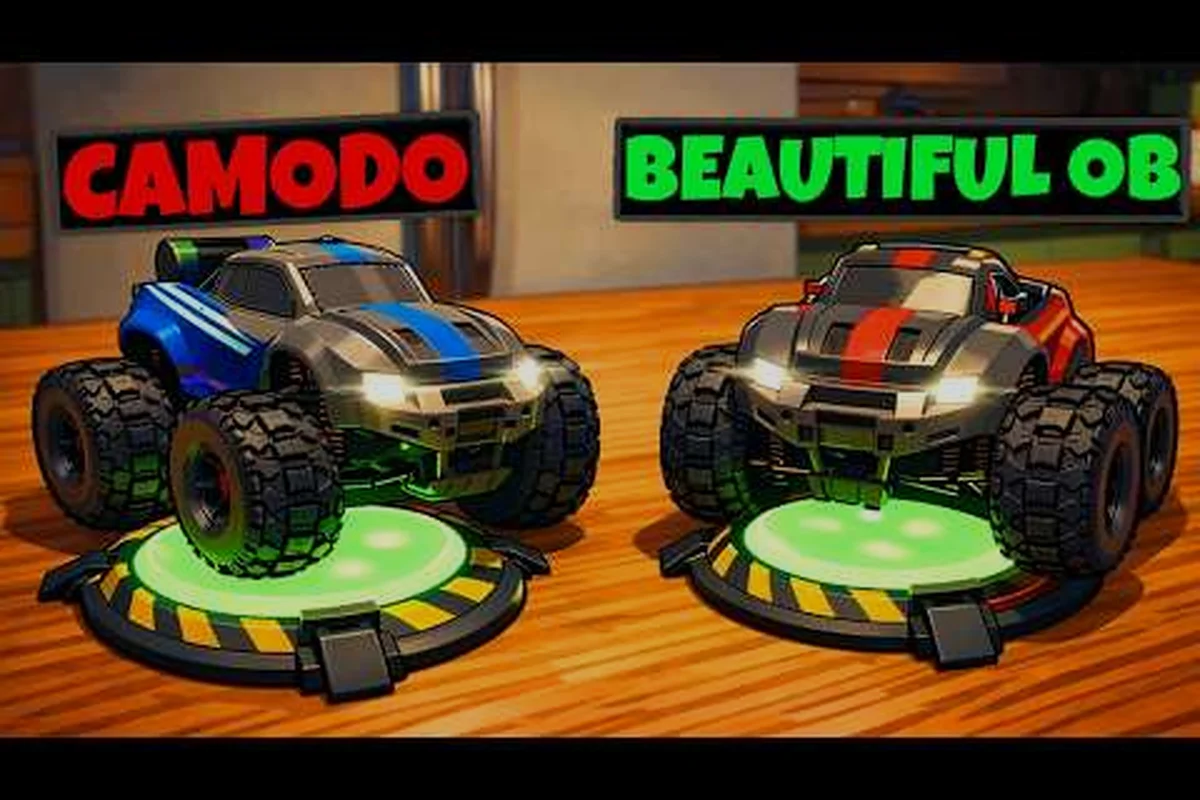
When you're playing in co-op, the ramp puzzles become much easier because one car can act as a counterweight on the landing platform. The extra weight prevents the car from bouncing off the platform when it lands, which is a common problem in the solo version. The other car can then drive the ramp at full speed, and the momentum carries it across the gap. This is one of the few places where having two players genuinely changes the game, because the physics engine treats the landing platform differently when it's weighted. You can see the ramp mechanics in action in Camodo Gaming's demo gameplay video, which shows the garage ramp puzzle being solved in real time.
WheelMates Rotating Puzzle Timing: Turntables and Locking
WheelMates rotating puzzles are the most timing-sensitive of all the physics puzzles, because they require you to align a turntable with a lock sensor while the platform is spinning. These puzzles appear in the later rooms of the professor's house, and they combine the pressure plate logic with a rotating element. The turntable spins continuously, and you need to drive your car onto it at the right moment so that the weight triggers the lock sensor when the turntable reaches the correct position. The rotating puzzle in the study is the easiest one, because the slow rotation gives you a 3-second window to get into position.
Turntable Timing Windows
Each rotating puzzle in Wheelmates has a specific timing window — the precise moment when the turntable's marker sweeps into alignment with the door's lock. Missing that window by even one rotation forces you to re-trigger the pressure plate sequence, which resets the entire turntable and costs a full cycle. The table below gives you the timing for the common rotating puzzles, including the two-tick and three-tick variants found in the Rift Junction and Stacking Chamber floors, so you can line up your approach before the marker passes the lock.
| Puzzle Location | Rotation Speed | Timing Window | Best Approach |
|---|---|---|---|
| Study Turntable | Slow | 3 seconds | Drive on and stop |
| Library Rotator | Medium | 2 seconds | Drive in the marker |
| Lab Spinner | Fast | 1 second | Use the magnet grab |
The turntable in the study is the best place to practice, because the slow rotation gives you plenty of time to line up. The lock sensor appears when the marker aligns, so you need to position your car on the turntable before the window opens. For the fast lab spinner, community players recommend using the magnet grab to hold the turntable in place, which stops the rotation and gives you a much longer window to trigger the sensor.
Rotating Puzzle Co-op Strategy
In co-op, the rotating puzzles are much easier because one car can hold the turntable while the other drives the lock sensor. The rotating puzzle in the library requires one car to stay on the turntable while the other presses the pressure plate on the platform, which is a classic two-player coordination test. If you're playing solo, you'll need to use the magnet grab to stop the turntable, which is slower but still works. For the hardest rotating puzzles, the hardest puzzle guide breaks down the exact timing for each room, so you can check it if you're stuck.
Advanced WheelMates Physics Puzzle Strategies for Co-op
Once you've mastered the individual puzzle types, you'll face combinations that blend pressure plates, weight, ramps, and rotating elements in a single room. These advanced physics puzzles are where the game really shines, because they force you to plan your route and assign roles to your partner before you start moving. The key is to break the room down into smaller parts and solve each one before moving to the next, which prevents you from getting overwhelmed by the number of moving pieces.
Combining Mechanics in a Single Room
The final lab room, for example, combines a weight puzzle with a ramp and a rotating turntable in one sequence. You need to stack three crates on a pressure plate, then drive a ramp to reach the turntable, and finally trigger the code sequence on the wall panel. Here's a comparison of the puzzle types and their difficulty:
| Puzzle Type | Difficulty | Time to Solve | Key Gadget |
|---|---|---|---|
| Weight Puzzle | Medium | 3-5 minutes | Magnet Grab |
| Ramp Puzzle | Hard | 2-4 minutes | None |
| Rotating Puzzle | Hard | 4-6 minutes | Magnet Grab |
| Code Puzzle | Medium | 2-3 minutes | None |
The magnet grab is the most important gadget for the advanced puzzles, because it lets you control both the weight and the rotating elements. For the ramp section, you need to find the right speed, which is a matter of trial and error. The hardest puzzle in the game is the attic gauntlet, which combines all four types in a single room, and it takes most players about 10 minutes on their first attempt.
Co-op Role Allocation for the Hardest Rooms
The best strategy for the advanced physics puzzles is to assign roles: one player focuses on the weight and stacking, while the other handles the ramp and the rotating turntable. This reduces the cognitive load and makes the puzzle feel much more manageable. The Friend's Pass system lets a second player join without buying the game, so you can always bring a partner for the harder rooms. If you're playing solo, you'll need to switch between the cars, which is slower but still doable. The puzzle solutions guide covers the full walkthrough for every room, so you can check it if you get stuck on a specific combination.
Frequently Asked Questions
What is the WheelMates code puzzle?
The WheelMates code puzzle is a pressure plate sequence that requires you to trigger plates in a specific order to unlock a door. Each plate has a symbol that matches the code panel, and you need to hold or press them in the right order, often with two cars.
How do I solve the WheelMates weight puzzle?
To solve a WheelMates weight puzzle, you need to place enough mass on a plate to trigger the mechanism. Use the magnet grab to drag crates and barrels onto the plate, or park a second car on it. The gauge shows your progress.
What is the best strategy for the WheelMates ramp puzzle?
The best strategy is to find the correct ramp angle and build up speed. A 45-degree ramp gives the highest height, but you need a fast run-up. In co-op, have one car hold the counterweight while the other drives the ramp.
Can I solve the rotating puzzle solo?
Yes, but it's harder than co-op. Use the magnet grab to stop the rotating turntable and hold it in place while you position the car. In co-op, one player holds the turntable while the other triggers the pressure sensor, which is much faster.
Why are the WheelMates physics puzzles so hard?
The physics puzzles are hard because they combine weight, ramp, and rotating mechanics in a single room, which requires planning and coordination. The hardest ones, like the attic gauntlet, combine all four types, so you need to break them into smaller steps.