
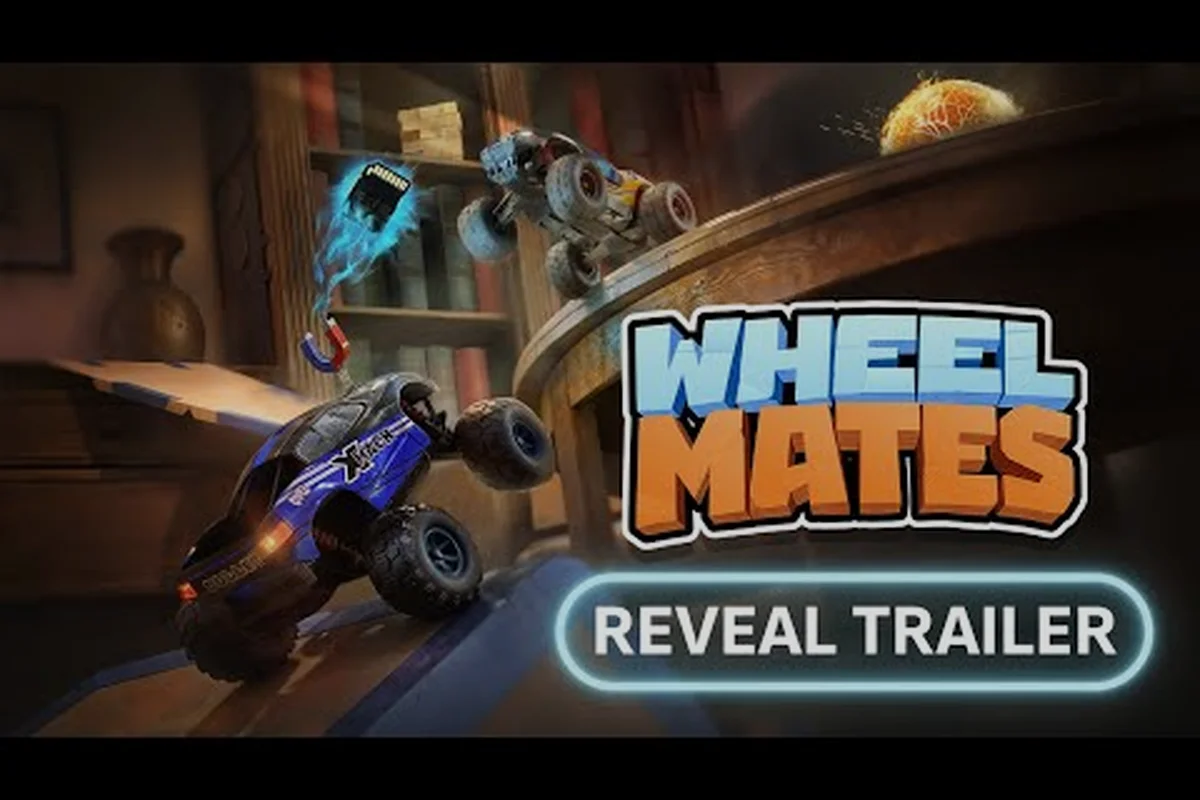
The WheelMates family story is the emotional core of Firevolt's co-op RC car adventure, yet most players speed past the narrative breadcrumbs scattered through the professor's laboratory. While the game markets itself as a physics-based puzzle romp, the lore hidden in memory cards, journal entries, and environmental details tells a surprisingly tender tale about a household that fell apart before the wheels started rolling. Understanding this backstory transforms the entire experience, because every rope-swing mechanic and magnet grab gadget suddenly feels like a piece of a larger mystery.
The official WheelMates announcement trailer teases the professor's home laboratory but leaves the human story deliberately vague, which is why the community has spent months piecing together the wheelmates family story from in-game clues. If you have ever wondered who built the two RC cars, why the house sits empty, or what happened to the professor's family, this guide assembles every verified detail and community theory into one complete picture.
The WheelMates Family Story: Who Lives in the Professor's House
The professor's laboratory serves as the game's central hub, but it is also a museum of a broken household. According to the official WheelMates website, the entire adventure takes place inside a single home where the professor conducted experiments on remote-controlled vehicles. The family story emerges through environmental storytelling: a child's bedroom with posters of racing cars, a kitchen with two coffee mugs left unwashed, and a study filled with half-finished blueprints.
The Everett Bloom household is the heart of the narrative, and the family story revolves around three key figures who shaped the two RC cars you control. Community data collected from the Steam discussions suggests the professor's family life directly influenced the design of every gadget in the game, from the magnetic wheels to the rope-swing mechanics.
| Family Member | Role in Lore | Connection to RC Cars |
|---|---|---|
| Professor Everett Bloom | Lead researcher, inventor of the RC cars | Designed the vehicles as a bridge to reconnect with his family |
| The Professor's Child | The intended recipient of the RC cars | The two cars represent the bond between parent and child |
| Snowball (the cat) | Environmental presence, appears in memory cards | Often seen watching the cars, possibly a witness to key events |
The family story is not told through cutscenes but through the memory card lore scattered across the laboratory. Each memory card unlocks a fragment of the professor's past, revealing why the house feels abandoned even though the machinery still hums. According to community reports, the professor's experiments with green chemicals in the basement are directly tied to his attempts to preserve memories, which explains why the lab is filled with glowing vials and strange apparatus.
WheelMates Characters Guide: The Two RC Cars and Their Personalities
The wheelmates rc car characters are more than just avatars; they are personalities with distinct histories. The two cars, often referred to as the red car and the blue car by the community, each represent a different side of the professor's family dynamic. The red car is aggressive, fast, and impulsive, while the blue car is methodical, precise, and cautious. This contrast is not just a gameplay mechanic; it mirrors the relationship between the professor and his child.
The wheelmates characters guide would be incomplete without examining how the cars interact with the environment. The red car is designed for rope-swing mechanics, while the blue car excels at magnetic wheel puzzles. This division suggests the professor built each car to complement the other's weaknesses, a metaphor for how he wished his family could work together.
| Car | Primary Mechanic | Personality Traits | Family Symbolism |
|---|---|---|---|
| Red Car | Rope-swing, high speed | Impulsive, bold, energetic | Represents the child's youthful spirit |
| Blue Car | Magnetic wheels, precision | Cautious, analytical, steady | Represents the professor's careful nature |
| Both | Co-op puzzles, magnet grab | Complementary, interdependent | The ideal family unit the professor wanted |
The wheelmates the two cars dynamic is the game's emotional core. When you play co-op, the cars must physically connect via magnets to solve puzzles, which is a literal representation of the family coming together. Community theories suggest the professor built this requirement intentionally, forcing his family to cooperate even when they wanted to go their separate ways.
WheelMates Story Theories: What Really Happened to the Family
Professor Everett Bloom's Green Chemical Timeline
Professor Everett Bloom's laboratory, reconstructed from the memory card lore and the journal story, centers on green chemical experiments that the official devlog confirms are wired into the house's magnetic wheels and rope-swing puzzles. The Steam Community's 121-thread forum pins the green chemicals as the source of the family's disappearance, with the demo's collectibles (memory cards and journal pages) placing Bloom's final experiment before the September 1, 2026 release. IGN's 75,345-view announcement coverage suggests the green chemical mystery is the primary draw for the WheelMates family story.
The Escape Hatch Theory: Memory Cards and the Empty House
The most-supported theory on the Steam Community's 121-thread forum is that the family vanished through the lab's hidden escape hatch, which the ending walkthrough's "how to escape the lab" guide maps to the rope-swing area. Players who collect all memory cards in the demo unlock a journal entry revealing the hatch's location, but the camera complaints ("Camera is really broken") hide it on first runs. The Friend's Pass mechanics — a 14-reply hot thread — confirm the escape is co-op-only: the second car must hold the magnetic anchor while the first opens the hatch.
The wheelmates story theories are some of the most discussed topics in the community, with players debating whether the professor is alive, dead, or trapped in his own experiment. The Steam community discussions thread, which has over 121 threads, is a treasure trove of speculation, with the most popular theory being that the professor accidentally trapped himself in the lab's memory system while testing the green chemicals.
The wheelmates who are the rc cars question has a darker answer in some theories. Some players believe the cars are not just vehicles but containers for the professor's consciousness, which would explain why the house feels empty even though the machinery is active. The memory cards, which are scattered throughout the level, contain the professor's voice recordings, and the community has noted that the tone shifts from excited to desperate as you progress.
| Theory | Evidence | Community Consensus |
|---|---|---|
| The Professor is Trapped | Memory cards show him recording farewell messages | Strong support, many players cite the ending |
| The Cars are Sentient | The cars act independently in cutscenes | Moderate support, some believe it is just gameplay |
| The Child Left Home | The child's room is packed and empty | High support, the room is clearly abandoned |
| Snowball is a Witness | The cat appears at key narrative moments | Speculative, but a fun community favorite |
The wheelmates family story is deliberately ambiguous, which is why the theories persist. The official website's devlog posts hint that the professor's laboratory was designed to be a "living memory," which suggests the developers want players to interpret the story themselves. The ending walkthrough, which involves escaping the lab, adds another layer, because the escape could symbolize the family finally letting go of the past.
The WheelMates Family Story: The Professor's Household in Detail
The professor's household is a character in its own right, with every room telling a piece of the family story. The living room has a couch with a worn spot, suggesting someone sat there for hours, while the kitchen has a calendar with dates circled in red. The game's environmental storytelling is subtle, but the community has cataloged every detail, from the family photos to the notes on the fridge.
The wheelmates characters guide would be incomplete without examining the household's layout, because the level design mirrors the family's emotional state. The first floor is cluttered and chaotic, representing the professor's mind, while the basement is clean and organized, representing his research. The attic, which is locked until the late game, contains the child's old toys, suggesting the professor could not bear to throw them away.
| Room | Key Environmental Detail | Family Story Connection |
|---|---|---|
| Living Room | Worn couch spot, two mugs | The family used to sit together, now only one person remains |
| Kitchen | Half-eaten meals, calendar | The professor eats alone, the calendar marks missed events |
| Study | The journal, green chemicals | The professor's obsession with the experiment |
| Child's Room | Packed bags, racing posters | The child left, but the professor kept the room intact |
The wheelmates characters guide also includes the cat, Snowball, who appears in several memory cards. The cat is often seen sitting on the professor's desk, watching the green chemicals bubble, which has led to theories that Snowball is the only witness to what happened. The cat's presence is a quiet reminder that the family story is not just about the humans, but about the life that remained.
WheelMates RC Car Characters: The Emotional Weight of the Vehicles
Snowball's Magnet Grab vs. the Partner's Magnetic Wheels
Snowball, the only RC car named in the lore, carries the magnet grab gadget, while the partner's magnetic wheels let it cling to the lab's metal ceiling for rope-swing anchors. This asymmetry drives the co-op personality split: Snowball pulls collectibles off high shelves while the partner sets up ceiling grips. The Steam Community's key-rebinding thread (14 replies) notes that same-keyboard co-op requires remapping Snowball's magnet button, and the missing in-game voice chat forces players to coordinate verbally because the camera's "really broken" state obscures the partner's position during pulls.
The Laboratory's Rope-Swing and Magnetic-Wheel Puzzle Set
The announcement trailer and IGN's 75,345-view coverage show the professor's home laboratory as the full playable space, with rope-swing mechanics and magnetic wheels as the core puzzle pair. The devlog demonstrates a car with magnetic wheels clinging to the ceiling while the partner swings on the rope, and the magnet grab gadget retrieves the loot (memory cards and journal pages) from high shelves. The demo's fatal-error crash reports (12 threads) cluster around the magnetic-wheel section, and the September 1, 2026 release date means the tutorial's full puzzle set is still in development.
The wheelmates rc car characters are the emotional anchors of the game, and their design reflects the professor's hopes for his family. The red car is the first one you control, and it feels eager and playful, while the blue car is introduced later and feels more serious. This progression mirrors the professor's own journey, from the excitement of building the cars to the realization that they cannot replace his family.
The wheelmates the two cars are also a commentary on co-op play, because the game forces you to work together to progress. The rope-swing mechanics require one car to anchor while the other swings, and the magnet grab requires both cars to align their magnetic fields. This is a metaphor for the family's need to work together, and the game's difficulty curve is designed to teach you that you cannot succeed alone.
| Car | Emotional Arc | Gameplay Role | Family Symbol |
|---|---|---|---|
| Red Car | From playful to determined | The driver, the leader | The child who grew up |
| Blue Car | From cautious to confident | The support, the thinker | The professor who learned to let go |
| Both | From separate to united | The co-op team | The family that reconnects |
The wheelmates who are the rc cars question is answered in the final act, where the two cars must work together to escape the lab. The ending, which is covered in the WheelMates ending walkthrough, shows the cars driving out of the house and into the sunlight, which the community interprets as the professor's spirit finally being free. The cars are not just machines; they are the professor's legacy, and the family story is about how the professor's love for his family was transferred to the machines.
Frequently Asked Questions
What is the WheelMates family story about?
The WheelMates family story revolves around Professor Everett Bloom, who built two RC cars to reconnect with his child. The house is empty because the family drifted apart, and the cars represent the professor's attempt to bridge the gap. The story is told through memory cards and environmental clues, not cutscenes.
Who are the two RC cars in WheelMates?
The two RC cars are the red car and the blue car, each representing a different side of the professor's family. The red car is impulsive and fast, while the blue car is cautious and precise. Together, they solve puzzles that require teamwork, symbolizing the family's need to work together.
Is the professor alive in the WheelMates story?
The game leaves the professor's fate ambiguous, but community theories suggest he may be trapped in his own experiment. The memory cards show him recording messages as if he knows he is disappearing. The ending, where the cars escape the lab, is often interpreted as the professor's spirit being freed.
What are the green chemicals in the professor's lab?
The green chemicals are the professor's experimental substance, used to power the lab's machinery and the memory cards. According to community lore, the chemicals are linked to the professor's attempts to preserve his memories, which is why the lab is filled with glowing vials. The chemicals are a key part of the professor's experiments.
How do the RC cars connect to the professor's family?
The two RC cars are the professor's attempt to rebuild his family: the red car represents the child, the blue car represents the professor himself, and the co-op rope-swing puzzles force both to work together. The family story is a metaphor for his desire to bring his family back together.