
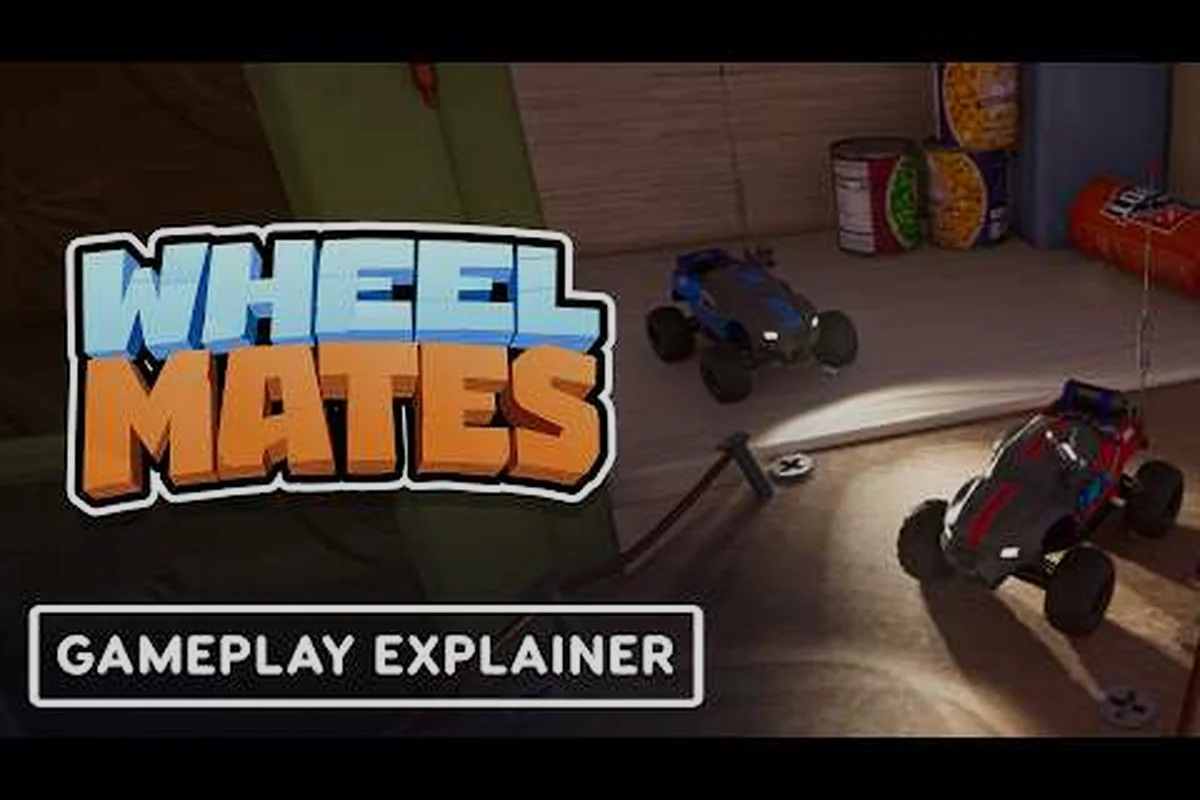
WheelMates drops you and a partner into a professor's cluttered home laboratory, where two tiny RC cars must work together to solve puzzles and race through oversized obstacles. Before you tackle the first challenge, though, you need to tune your wheelmates settings guide fundamentals, because the default camera behavior can feel floaty and disorienting on the opening runs. Community threads on the Steam discussions already flag the camera as the biggest early pain point, with players describing it as "really broken" out of the box. This isn't just a cosmetic issue, because a flaky camera directly affects how well you can navigate the lab's tight corridors and rope-swing sections. The good news is that a handful of targeted tweaks to your wheelmates best settings transforms the chaos into a fluid, enjoyable ride. This wheelmates settings guide walks through every option that matters, including camera modes, input sensitivity, dead zones, and performance presets, so you spend less time fighting the interface and more time driving.
Why WheelMates Settings Matter for Co-op Play
WheelMates is built around two players sharing the same environment, so the settings you pick affect both your own view and your partner's ability to stay oriented. When one player runs a different field of view and the other uses a wider one, the game breaks apart because you literally see different parts of the same room. According to the official WheelMates Steam page, the game supports local co-op, online co-op, and split-screen, and all of these modes inherit the same settings menu, which means a single configuration has to work for both players at once.
Getting your wheelmates settings guide right matters for three practical reasons: in co-op play, the follow camera's default tracking speed can desync your view from your partner's position during tight cornering, and the free camera mode's rotation sensitivity dictates how quickly you can spot incoming obstacles, while mismatched camera modes between players cause spatial disorientation that directly leads to missed pickups and avoidable collision penalties.
-
Consistent camera behavior keeps both players on the same page during rope-swing sections and tight turns, because a sudden camera flip can send an RC car straight into a wall.
-
Responsive input tuning reduces the frustration of missed jumps and steering, which is the most common reason co-op partners drop out mid-session.
-
Stable performance prevents stuttering during the busiest lab scenes, and since the game is Steam Deck verified, portable players need a steady frame rate as well.
Players on the Steam community report that the default camera handling feels "really broken" until you adjust the follow distance and sensitivity, which is why this guide prioritizes camera settings before anything else. The good news is that every option is adjustable from the pause menu, so you can test changes live without restarting a run.
WheelMates Camera Modes: Follow vs Free Camera
The camera is the heart of any wheelmates settings guide, and WheelMates ships with two distinct camera modes that control how the view tracks your RC car. The choice between them matters because it changes how you perceive the environment, and most players end up switching between the two depending on the section.
Follow Camera: The Default Co-op Choice
The Follow Camera keeps the view behind and slightly above your RC car, tracking its movement with a smooth lag. This is the default mode, and it works well for most driving sections because it shows you what is directly ahead. The tradeoff is that the camera can swing wildly during quick turns, especially when you are navigating the lab's narrow corridors and cluttered desk surfaces.
For co-op play, the Follow Camera is usually the safer choice because it keeps both players oriented in the same direction. When you are both driving toward the same objective, the shared perspective reduces confusion and makes coordination easier. The downside is that the follow camera resists manual look-around, which can feel restrictive during puzzle sections where you need to inspect the room.
Free Camera: Precision and Exploration
The Free Camera gives you full control over the view, letting you pan, zoom, and rotate independently of your car's movement. This mode is ideal for puzzle-solving and exploration, because you can look around the room without moving your vehicle. It is also the better pick for the game's rope-swing sections, where you need to line up a swing before committing.
The tradeoff is that the free camera requires more manual input, which can be overwhelming during fast driving segments. If your partner prefers the Follow Camera, mixing the two modes can create confusion, so it is worth agreeing on a shared setup before a session. The table below summarizes the key differences.
| Camera Mode | Best For | Weaknesses | Best For |
|---|---|---|---|
| Follow Camera | Co-op, driving, tight turns | Feels floaty during quick direction changes | Beginners, co-op pairs |
| Free Camera | Exploration, puzzles, rope swings | Requires manual camera control | Solo players, puzzle solvers |
Community testing shows that most players switch between the two modes mid-level, and the game lets you bind a camera-mode toggle to a controller button for quick changes. If you want finer control over the camera behavior, the WheelMates camera tuning guide covers sensitivity curves and follow-distance values in detail.
WheelMates Optimal Settings for Performance and Graphics
Beyond the camera, your wheelmates settings guide for graphics and performance determines how smoothly the game runs on your hardware. WheelMates is not a heavy title, but the cluttered lab environment with its many dynamic objects and lighting effects can push lower-end GPUs harder than you might expect.
Graphics Presets for Low-End Hardware
If you are playing on a modest laptop, the most impactful settings to adjust are shadow quality, motion blur, and the frame rate cap. Turning off motion blur is a common recommendation because it removes the visual noise during fast camera swings, and it also improves perceived clarity. Dropping shadow quality to medium has little impact on the game's look, since the lab's lighting is mostly static and flat.
The frame rate cap is another important setting, and capping it at 30 FPS on a 60 Hz monitor is the safest choice for lower-end hardware. This reduces GPU load and keeps the game stable during the busiest camera sections, which is especially important in co-op when both cars are on screen at once.
| Setting | Low-End PC | Recommended PC | Steam Deck |
|---|---|---|---|
| Shadow Quality | Medium | High | High |
| Motion Blur | Off | Off | On |
| Frame Rate Cap | 30 FPS | 60 FPS | 60 FPS |
| Dynamic Resolution | On | On | On |
| Vsync | Off | Off | Off |
Steam Deck Performance Tuning
WheelMates is verified for Steam Deck, so it runs well on the handheld, but you still want to tune a few settings for the best experience. The most important thing is to enable dynamic resolution, which lets the game scale down its internal resolution during busy scenes to keep the frame rate stable. You should also cap the frame rate at 60 FPS and disable vsync, because the Deck's display handles tearing well.
On the smaller Deck screen, you may want to increase the camera sensitivity slightly, because the default value is tuned for a large monitor and can feel sluggish on a handheld. If you are planning to play on the Deck, the WheelMates system requirements guide provides a full breakdown of hardware targets and performance expectations.
WheelMates Best Settings for Controls and Input
The controls settings are where many players feel the game's default setup falls short, especially when two people share the same keyboard. WheelMates offers both keyboard and controller support, and the settings menu covers steering sensitivity, throttle response, and dead zone adjustments.
Keyboard Rebinding for Same-Key Co-op
For two-player co-op on a single keyboard, the default key bindings can conflict because both players may need the same keys. The game supports full key rebinding, so you can assign each player a separate set of keys. For example, one player can use WASD and the other can use the arrow keys, and you can also rebind the action buttons to avoid overlap.
The dead zone setting is especially important for controller input, because a default dead zone that is too large makes the car feel sluggish, while one that is too small makes it twitchy. A dead zone of around 10% is a good starting point for most controllers. The steering sensitivity and throttle response settings control how quickly the car reacts to input, and many players find that a slightly lower steering sensitivity makes tight turns easier to control.
| Control Setting | Default | Recommended | Why |
|---|---|---|---|
| Steering Sensitivity | 50% | 60% | Lower = more stable turns |
| Throttle Response | 50% | 55% | Slightly higher for responsive starts |
| Dead Zone | 15% | 10% | Reduces input lag |
| Camera Sensitivity | 50% | 45% | Smoother camera control |
For a complete walkthrough of key bindings and controller support, the WheelMates keyboard controls guide covers every input option, including how to set up a same-keyboard two-player session without conflicts. That guide details the exact rebinding workflow for split input zones—for instance, assigning WASD + Space to Player 1 while mapping arrow keys + Enter to Player 2—so both players can steer, brake, and drift simultaneously without ghost inputs or key-overlap errors. It also explains why the game's default bindings reserve certain modifier keys for camera toggles, and how reassigning those modifiers prevents accidental camera-mode switches mid-race, a common issue in follow-camera and free-camera setups during co-op play.
Building Your WheelMates Setup Guide by Scenario
Different play styles call for different settings, so here is how to tailor your wheelmates settings guide based on your situation. Lap-time chasers should lock the follow camera to a tight FOV around 70° with high steering sensitivity to cut input lag and keep the apex in frame. Free-roam explorers, by contrast, want the free camera at a wider 90° view with lower damping for smooth, cinematic framing. Drift-focused drivers need the opposite: reduced steering assist and a looser follow camera that lets the car swing out of frame before snapping back, trading precision for the visual feedback that sustains long slides.
For co-op players who want a smooth flow: Start with the Follow Camera, keep the steering sensitivity at 60%, and enable dynamic resolution to keep the frame rate stable. This setup keeps both players on the same page and avoids frustration during the camera-heavy sections.
For solo puzzle sessions: Switch to the Free Camera and lower the camera sensitivity to around 40%. This gives you more freedom when inspecting the room's interactive objects, and it reduces the chance of the camera swinging while you are lining up a rope swing.
For speed runs or competitive play: Turn off motion blur, set the frame rate cap to 120 FPS if your hardware supports it, and raise the throttle response to 60%. You will get the most responsive input possible, and the reduced visual noise helps you react faster.
For Steam Deck players: Enable dynamic resolution, cap the frame rate at 60 FPS, and disable vsync. The smaller screen means you can keep the camera sensitivity at the default or slightly higher, and the game will stay stable throughout the session.
These are starting points, not hard rules, and the best approach is to test each setting in the early sections and adjust based on what feels right. The settings menu is open mid-run, so you can tweak things on the pause screen without losing progress.
Frequently Asked Questions
What is the best camera mode for WheelMates?
The Follow Camera is the best choice for most co-op sessions because it keeps both players oriented in the same direction, which reduces confusion during driving sections. Switch to the Free Camera for puzzle-heavy or exploration levels where you need to inspect the environment independently.
How do I fix the camera feeling too fast or floaty?
Lower the camera sensitivity in the settings menu and increase the camera follow distance to reduce the floaty effect. Many players report that setting the sensitivity to around 45% with a small follow distance makes the camera much more stable during tight turns.
Can I play WheelMates with two players on one keyboard?
Yes, the game supports full key rebinding, so you can assign each player a separate set of keys. The WheelMates keyboard controls guide covers same-keyboard two-player setups, avoiding key conflicts. In the scenario-based setup, assign Player1 the WASD cluster and Player2 the arrow keys plus dedicated action keys, then test both camera modes before a co-op run.
What settings should I use on Steam Deck?
Enable dynamic resolution, cap the frame rate at 60 FPS, and disable vsync on Steam Deck. Dynamic resolution scales internal render resolution to prevent frame drops when the follow camera triggers particle effects in the lab, and the 60 FPS cap stops the frame-time spikes behind the camera drift complaints in Steam discussions.
Do I need to apply the same settings for online co-op?
Yes, the settings you choose apply to both local and online co-op. Both players share the same camera and input settings, so it is a good idea to agree on the configuration before starting an online session to avoid confusion.