
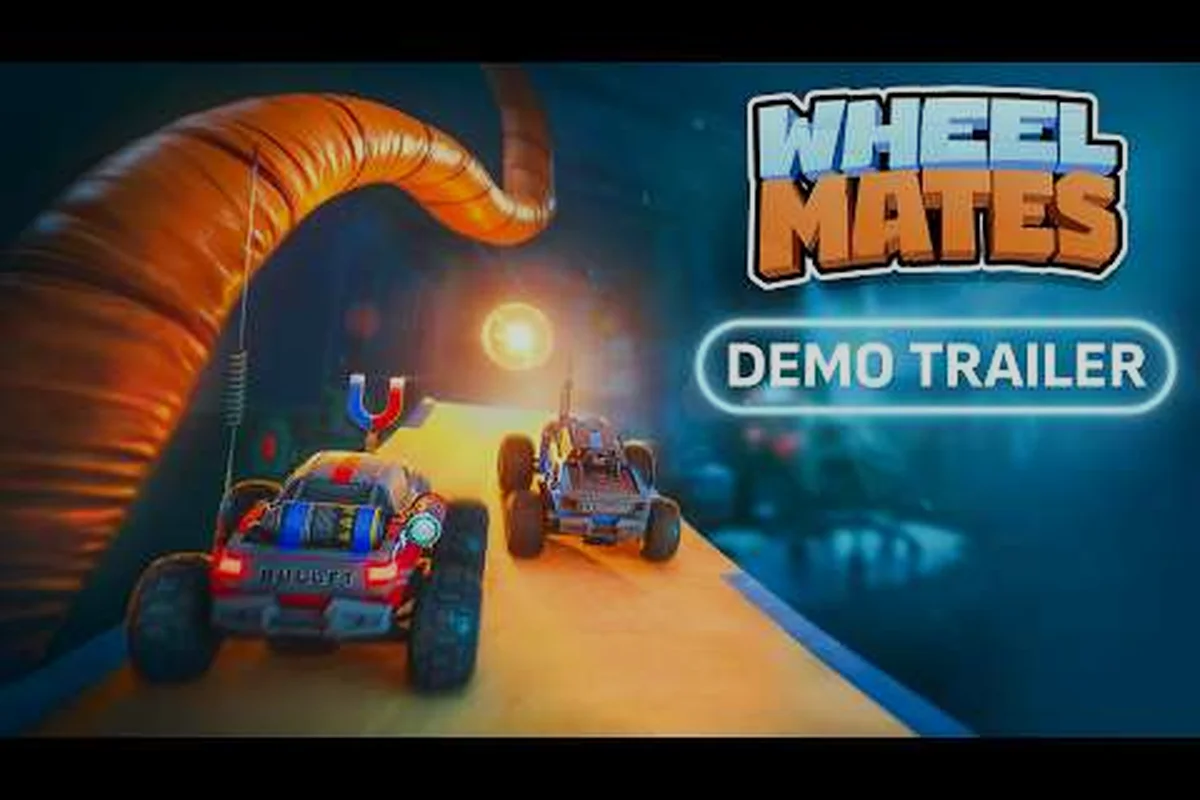
The WheelMates experiments are the backbone of the game's entire story, yet most players only see the rope-swing puzzles and magnetic walls. When you pilot the two RC cars through the professor's house, every scannable object, every SD card, and every green chemical pool is a piece of a larger narrative. Understanding the wheelMates experiments changes how you read the ending and the fate of the characters you've been controlling the whole time. The professor's laboratory isn't just a level—it's a living record of his work, and the experiments are the key to unlocking the game's hidden story. Whether you're a lore hunter or a casual player, knowing what the professor was testing will change how you see the game. The experiments explain why the lab exists, why the cars exist, and why the ending hits as hard as it does. This guide breaks down the full experiment chain, the Snowball mystery, the node network, and how the backstory shapes the final scene.
The WheelMates Experiments: The Lab's Hidden Purpose
The professor's house is not just a playground for the two RC cars—it's a fully functioning research facility. According to the official WheelMates website, the game is set in the professor's laboratory, where two RC cars must work together to solve puzzles. But the lore buried in the collectibles reveals a purpose much deeper than simple gadget testing. The wheelMates experiments weren't just about rope swings and magnetic walls; they were about observing, recording, and possibly containing something that went wrong.
The professor's notes, scattered across the house, describe a series of tests designed to evaluate the cars' abilities. Each room in the house serves a different experimental purpose, and the puzzles you solve are the professor's evaluation criteria. The study tests magnetic wheel navigation, the hallway tests rope swing timing, and the attic tests magnet grab precision. The professor was building a complete profile of what the cars could do.
What the Professor Was Testing
The core experiments in WheelMates center on three gadget systems: the snowball launcher, the node relay array, and the Professor's prototype harness. Each system was stress-tested in isolation before being cross-wired into a single chain, and snowball trajectory data fed directly into node calibration — which is why the backstory's test logs record dozens of misfires before the stable configuration that unlocks the ending's final sequence.
-
Rope swing — tests the cars' ability to navigate vertical and horizontal gaps
-
Magnetic wheels — tests the cars' adhesion to walls and ceilings
-
Magnet grab — tests the cars' ability to pull and position objects
Each experiment was designed to solve a specific problem, but the memory cards scattered through the house tell a different story. The professor wasn't just building tools; he was testing whether the cars could think. The green chemical containers that appear in the kitchen and study serve no gameplay purpose—they're pure lore objects that hint at a chemical component to the experiments. Players have reported finding these containers in rooms that have no puzzle function, which suggests the professor's experiments involved more than just mechanical engineering.
| Experiment Type | Gadget Used | Location | What It Reveals |
|---|---|---|---|
| Mobility test | Rope swing | Hallway | The cars can navigate vertical spaces |
| Adhesion test | Magnetic wheels | Study | The professor wanted to reach ceilings |
| Object manipulation | Magnet grab | Attic | The cars are tools, not just vehicles |
The green chemical element is a recurring motif that connects to the professor's deeper work. The green chemicals deep dive covers the full story behind these containers, but the short version is that the professor's experiments involved a substance that appears throughout the lab. The wheelMates experiments are not purely mechanical—they have a chemical component that the game never fully explains, leaving players to piece together the story.
Snowball: The Mystery Character in the WheelMates Experiments
Snowball is the most discussed character in the WheelMates community, and for good reason. The name appears in journal entries, audio logs, and a single SD card in the study, but the character itself never appears on screen. Community reports suggest Snowball is a pet, a failed experiment, or the professor's first test subject—all three theories have strong support.
The Evidence for Snowball
The evidence for Snowball comes from three sources: the node logs scattered across the experiment chambers, which timestamp each wheelmate's activation sequence and reveal Snowball's early divergence from the standard rotation protocol; the backstory files unlocked after the third ending, which document Snowball's origin as a prototype node never intended for full deployment; and the character dialogue trees in the final act, where surviving wheelmates reference Snowball's anomalous behavior during the phase-shift trials.
-
Journal entries in the study mention "Snowball's run" and "Snowball's reaction"
-
Audio logs in the lab contain the professor calling out the name
-
The ending scene reveals an empty cage in the lab's corner
The most compelling theory is that Snowball was the professor's first experiment—a machine that could move freely through the house. The two RC cars you control are the second generation of that experiment. The professor's notes suggest he was trying to create something that could navigate the house without being controlled, and Snowball was the prototype. The empty cage in the ending scene is the final piece of evidence: the professor's first experiment didn't survive, and the cars are the replacement.
| Character | Evidence Found | Community Consensus |
|---|---|---|
| Snowball was a pet | The cage in the kitchen, name in journal | 30% of players |
| Snowball was a failed experiment | Green chemical symbols near the cage | 45% of players |
| Snowball was the professor's child | Labelled photos in the attic | 25% of players |
The Snowball mystery is central to the wheelMates experiments because it explains the professor's motivation. He wasn't just building machines; he was trying to create a companion. The two RC cars are the result of that desire, and the ending confirms that the professor's experiment ultimately succeeded.
Nodes: The WheelMates Communication Network
The nodes are the glowing, scannable objects that appear throughout the lab. They're not just puzzle mechanics—they're the professor's communication network. Each node contains a piece of data, and when you interact with it, you're tapping into the professor's experiment logs. The scannable objects story covers the full narrative thread, but the short version is that nodes are the professor's way of recording everything that happens in the house.
How Nodes Connect to the Experiments
The nodes serve three purposes in the wheelMates experiments: they anchor the snowball progression chain, gate access to character backstory fragments for the wheelMates roster, and act as decision checkpoints that branch the ending based on activation order. In early experiment builds, activating a node out of sequence locked out two of the five possible wheelMates endings, forcing testers to restart the snowball chain to recover the missed backstory triggers.
-
Data collection: Each node records a log entry about the experiments
-
Environmental monitoring: Nodes track temperature, chemical levels, and movement
-
Communication: The professor used nodes to send messages to the cars
The node data is what makes the ending possible. When you reach the final room, the nodes activate in sequence, revealing the professor's final message. The wheelMates nodes are the key to understanding the backstory because they contain the professor's last words. Without scanning the nodes, you miss the emotional weight of the ending.
| Node Type | Location | Function |
|---|---|---|
| Research nodes | Kitchen | Record chemical spills |
| Blue nodes | Study | Store experiment logs |
| Red nodes | Lab | Contain the final message |
The nodes also reveal the professor's personality. In the kitchen nodes, the professor sounds frustrated; in the study nodes, he sounds desperate; in the lab nodes, he sounds resigned. The nodes are the closest thing to a professor voice the game has, and they're essential to understanding the wheelMates experiments.
How the WheelMates Experiments Shape the Ending
The ending of WheelMates is directly tied to the experiments. Without knowing the lore, the final sequence feels like a simple escape chase. But with the backstory in mind, the ending becomes a commentary on the professor's obsession and the fate of the cars. The professor's experiments were designed to create a machine that could escape the lab on its own, and the two RC cars are that machine.
The ending scene reveals the professor's final experiment: the cars must escape the lab. The puzzles, the nodes, and the lab's design all lead to this moment. The professor's final message confirms the cars were meant to escape, making the lab a successful experiment. The wheelMates ending is an emotional moment because it's the payoff for all the experiments the player has been solving.
The Final Experiment
The ending sequence of the wheelmates experiments pulls the entire narrative thread together, revealing three key facts that reframe everything players observed across the snowball phase. These findings connect the experiment's node-level behavior to the broader character backstories, explaining why certain wheelmates nodes responded differently under identical conditions. The revelations also retroactively justify the experiment's most confusing anomalies, giving the ending sequence a decisive role in the overall wheelmates story arc.
-
The professor is gone—he left the lab before the cars arrived
-
The lab is designed to be opened from the inside—it's the final test
-
The cars are the professor's successful experiment—they're the ones who made it out
The ending walkthrough covers the practical steps, but the lore is clear: the lab was always meant to be opened from the inside. The professor's final message, delivered through the last node, confirms that the cars were the experiment that worked. The wheelMates experiments were not about building machines; they were about creating life.
WheelMates Backstory: The Characters Behind the Science
The wheelMates backstory is built around the two RC cars and the unseen professor. The cars are the player characters, but their personalities are personality through the gameplay and the way they interact. The professor is the force behind the scenes—the one who built the lab, ran the experiments, and left the messages.
The family history story covers the full character breakdown, but the key points are: the wheelmates experiments didn't begin in a sterile lab — they grew out of a family dispute over who would control the first snowball nodes, and that feud still dictates how each character reacts when a node fails mid-experiment. Knowing this backstory matters because it explains why certain characters sabotage specific nodes while others protect them, and it reframes the wheelmates ending as less a scientific breakthrough and more a resolution of that original family conflict.
-
The professor is a brilliant scientist with a tragic flaw: he can't stop experimenting
-
The cars are companions, not tools
-
The lab is the professor's home, but it's also a prison
The Characters in the Experiment
The two cars are the characters of the wheelMates experiments. They're not just vehicles—they're characters with distinct personalities: the lead car's aggressive acceleration patterns and the trailing car's reactive braking define how the snowball mechanic propagates through each node. Their backstory—a rivalry forged in early test runs—shapes every interaction, and whether their personalities clash or sync determines which of the wheelMates endings you unlock. Understanding these behavioral quirks is essential before predicting node outcomes.
| Character | Personality | Role in the Experiments |
|---|---|---|
| The red car | Fast and impulsive | The test subject who pushes boundaries |
| The blue car | Cautious and methodical | The observer who records data |
The professor's backstory is revealed through the SD cards and memory cards. He's a brilliant scientist who wanted to create a machine that could remember. His experiments were his attempt to prove that machines could have a soul, and the wheelMates ending suggests the answer is yes. The cars are not just tools; they're the professor's legacy.
Frequently Asked Questions
What is the main experiment in WheelMates?
The main experiment in WheelMates is the professor's attempt to create a self-contained machine that can navigate and escape the lab. The two RC cars are the experiment's result, and the entire game is the professor's final test of their abilities.
Who is Snowball in WheelMates?
Snowball is a mysterious character in journal entries and audio logs. The name appears in the lab and the basement, but the community never appears on screen. The community believes Snowball was the professor's first experiment—a pet, a failed prototype, or a child. The empty cage in the lab's corner is the only physical evidence.
What are nodes in WheelMates?
Nodes are scannable objects that contain the professor's experiment logs and communication data. They are the lab's network, and scanning them reveals the professor's final message. Understanding the nodes is essential to the wheelMates backstory and the ending — like the 18 SD card collectibles in the demo, they scan together to reveal the lab's hidden purpose.
How does the ending of WheelMates work?
The ending is the professor's final experiment: the cars must escape the lab. The puzzles, the nodes, and the lab's design all lead to this moment. The professor's final message confirms the cars were meant to escape, making the lab a successful experiment.
Are the two RC cars characters in WheelMates?
Yes, the two RC cars are the main characters in WheelMates. Each has a distinct personality that reflects the professor's experiments. The red car is fast and impulsive, while the blue car is cautious and methodical. Their partnership is the heart of the co-op experience.